|
Que nous nous sommes rencontrés.
C’étaient principalement dans les festivals où nous avions à montrer nos films (Bruxelles, Rotterdam, Locarno, Berlin, Dunkerque) et aussi à l’école du Fresnoy (où il donnait des workshops, où je mixais mes films, au centre Pompidou et aux Films d’ici, où on croisait quelquefois Richard Copans, Barre Phillips, Richard Dindo et quelques autres. C’était comme une grande famille.
Je voyais tous ses films ; il ne voyait pas les miens (sauf une fois) nous étions tellement différents. Lui cinéaste engagé, moi replié sur moi-même.
Mais nous nous reconnaissions comme cinéastes « différents », avec une façon de voir et de capter la réalité. Pas besoin de caméra ni de pellicule pour ça. Juste entrer dans le paysage, aborder les gens, leur parler ou tout simplement se taire. Être avec eux. C’était là notre credo. Et c’est pour cela que nous étions farouchement sévères, parfois agressifs envers les films des autres, qui nous semblaient prétentieux, esthétiques ou « artistiques ». Nous voulions voir un plus aux films, quelque chose de plus, qui souvent manquait.
Nous évoquions parfois notre judéité. Juifs perdus et exilés en quelque sorte. Quelque chose de fort et en même temps de si secret que nous ne voulions pas en parler ni mettre ça dans nos films. Il m’accueillait toujours comme son rabbin.
Nous avions aussi des amis communs, Jonas Mekas, Johan Vander Keuken, Steve Dwoskin. C’est avec ce dernier que je fis un jour un film à quatre mains (Before the Beginning) avec Keja comme traductrice et preneuse de son. C’était pour recueillir la parole, la trace d’un ami, cinéaste génial, handicapé (atteint de poliomyélite) qui savait transformer ses obsessions et son désir en œuvre d’art.
Mais au fond, à y bien réfléchir aujourd’hui, nos films n’étaient pas si différents, car ils s’intéressaient à la même chose, à l’être humain dans le monde d’aujourd’hui, et se posaient les mêmes questions, d’ordre philosophique et métaphysique.
Erika m’intéressait autant que Robert, je la filmais en train de me masser sur la plage, car elle se préoccupait de toutes ces pratiques de méditation, de thérapie, frôlant la guérison.
Robert tournait Route one USA pendant que je tournais Lettre à mes amis restés en Belgique, le premier épisode de mon œuvre-phare, Babel. Dominique Païni trouvait d’étranges correspondances dans ces deux objets filmiques (et aussi avec Milestones), qui créent des liens avec les personnes rencontrées tout au long d’un voyage-film de plusieurs heures, dans une succession de petits moments, de scènes de la vie quotidienne, enchaînées, entrecroisées, avec un fil conducteur (moi dans mon film et Paul Mc Isaac, son « double » dans le sien). Somme de gestes, d’expériences et de rituels, dans une formule entre le « faux » documentaire et la fiction.
Comme moi-même je le faisais (et le fais toujours), il notait tout dans des carnets, en guise de « scénario ». Inévitablement cela ne pouvait déboucher que sur de l’improvisation et la surprise.
Dans Berlin 10/90 il expérimentait autre chose, de plus intime, dans un plan séquence de 60 minutes où lui-même était dans sa baignoire regardant sur un poste de télévision un reportage sur la destruction du mur de Berlin en 1989. Et dans Ghosts of Electricity, sorte d’essai de science-fiction, le film avait aussi l’allure de quelque chose de plus autobiographique, dans une forme expérimentale.
Pour parler de Robert, je suis obligé de parler de moi.
Parce que, à première vue, et pour le spectateur et même pour le cinéphile averti, nous pratiquions des cinémas tellement opposés (c’est aussi le cas de René Vautier, et dans une moindre mesure, de Johan Van der Keuken ou de Jonas Mekas), mais la démarche a toujours été la même. Et d’abord cette énergie que nous avons, cet effort physique que nous déployons (rien que pour arriver à faire un plan), qui est plus important que la réflexion intellectuelle. Quand par exemple, nous entrons chez une personne que nous avons l’intention de la filmer, dans un endroit que nous ne connaissons pas encore, nous filmons directement, sans trop réfléchir, quelques fragments du décor, des photographies sur le mur… qui nous parlent, on ne sait pas encore si ça entrera dans le film, ce sont comme des prémisses, mais aussi une façon de pénétrer dans un film à faire, de le constituer, en apprenant sur cette personne et sur nous-mêmes, plutôt qu’un confirmation de ce que nous savons déjà, avant d’entrer. Une investigation, une recherche et non la mise en boîte d’un scénario. Tâche combien difficile, car nous avons tous des a priori, des idées, des intentions toutes faites, des façons conformes de voir et de filmer. C’est très difficile de se nettoyer les yeux avant de voir. Et donc, à ce titre, le parler et les gestes des autres nous intéressent. Nous ne filmons pas des acteurs disant un texte, mais des personnes qui disent leur propre texte. Et ces personnes deviennent en quelque sorte les co-auteurs du film. Nous voyons le monde comme il est, comme il se présente à nous. C’est un travail d’historien, d’anthropologue, d’archéologue du présent. Enregistrer la mémoire des lieux. Ce qui sera effacé, qui n’existera plus, qui ne laissera aucune trace. Robert filmait la guerre, moi je filmais les chantiers, la destruction des villes.
Car nous aimons la nature et les gens. Le voyage et l’errance nous y ont sans doute aidé, car nous avions toujours le regard d’un étranger dans notre propre pays.
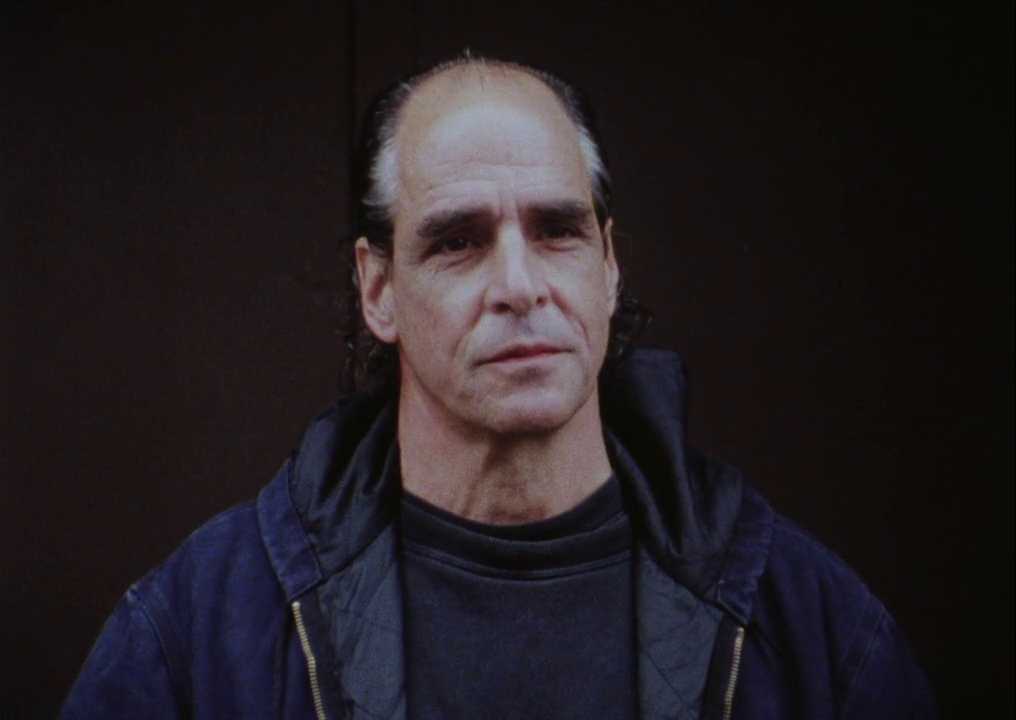
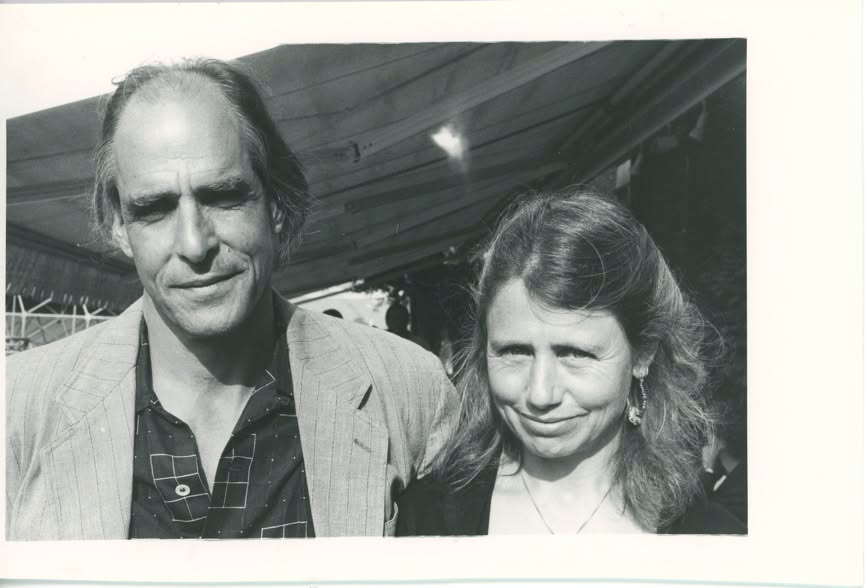
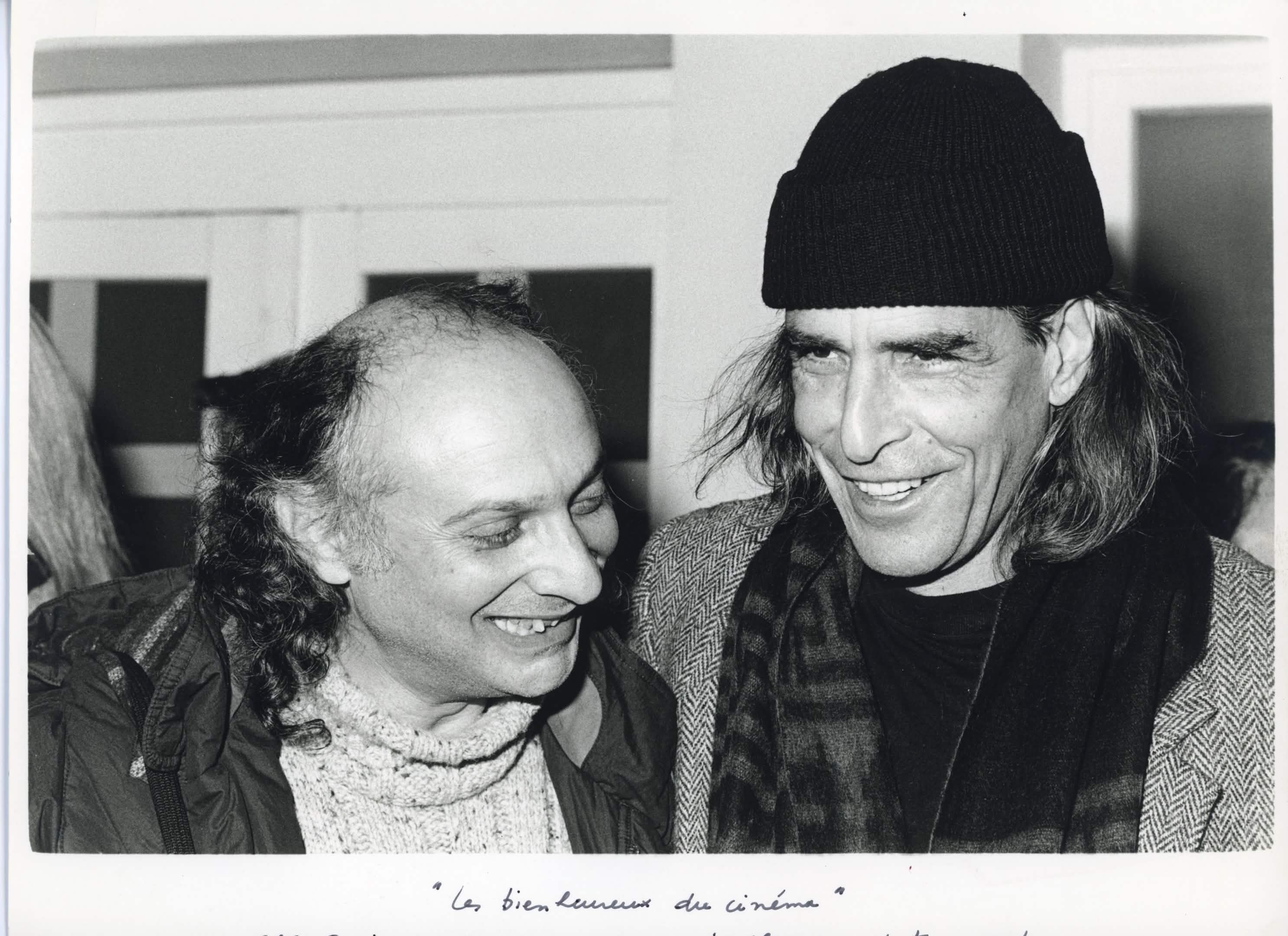
Mais je suis très gêné de devoir parier de lui comme on fait un hommage, alors que mes photos disent tout de notre amitié, de nos similitudes. Je vous en donne ici quelques-unes retrouvées pour la circonstance.
|
That we came to meet.
It was mainly at the festivals that we had for showing our films (Brussels, Rotterdam, Locarno, Berlin, Dunkirk) and also at the Fresnoy school (where he gave workshops, where I mixed my films), at the Centre Pompidou and at the Films d’Ici, where we sometimes crossed paths with Richard Copans, Barre Phillips, Richard Dindo and some others. It was like a big family.
I used to see all his films, he didn’t see mine (except one time). We were so different. Him, the committed filmmaker, me, withdrawn into myself.
But we recognized each other as “different” filmmakers, with a manner of seeing and capturing reality. No need for cameras or film for that. Just entering into the landscape, approaching the people, talking to them or quite simply remaining silent. Being with them. There was our credo. And that’s why we were fiercely strict, sometimes aggressive, towards the films of others, which seemed to us pretentious, aesthetic or “artistic”. We wanted to see more in the films, something more, which was often lacking.
We sometimes evoked our Jewishness. Lost and exiled Jews, in a way. Something powerful and so secret at the same time that we did not want to speak about it or put it in our films. He always used to welcome me as his rabbi.
We also had mutual friends: Jonas Mekas, Johan van der Keuken, Steve Dwoskin. It was with the latter that I once made a film for four hands (Before the Beginning) with Keja as translator and sound recorder. It was in order to collect the words, the trace of a friend, a brilliant, disabled (affected by poliomyelitis) filmmaker who knew how to transform his obsessions and his desire into works of art.
But deep down, reflecting on it today, our films weren’t so different, because they were interested in the same thing, in the human being in today’s world, and posed the same questions, of a philosophical and metaphysical order.
Erika interested me as much as Robert. I filmed her while she massaged me on the beach, because she was concerned with all these practices of meditation, therapy, verging on healing.
Robert was shooting Route One/USA while I was shooting Lettre à mes amis restés en Belgique (Letter to my Friends who Stayed in Belgium), the first episode of my key work, Babel. Dominique Païni found strange correspondences between these two filmic objects (and also with Milestones), which create ties with the people encountered throughout a journey-film of several hours, in a succession of small moments, scenes from everyday life, linked together, criss-crossed, with a common thread (myself in my film and Paul McIsaac, his “double” in his). A sum of gestures, experiences and rituals, in a formula between “false” documentary and fiction.
As I used to do myself (and still do), he noted everything down in notebooks, by way of a “scenario”. Inevitably, this could only lead to improvisation and surprise.
In Berlin 10/90, he experimented with something else, something more intimate, in a 60-minute long sequence shot where he himself was in his bathtub watching, on a television set, a news report on the destruction of the Berlin Wall in 1989. And in Ghosts of Electricity, a kind of essai of science-fiction, the film also had the allure of something more autobiographical, in an experimental form.
To speak of Robert, I am obliged to speak of myself.
Because, at first glance, and for the spectator and even the informed cinephile, we practiced such opposing cinemas (this is also the case with René Vautier and, to a lesser extent, with Johan van der Keuken or Jonas Mekas), but the approach has always been the same. And, before anything else, this energy we have, this physical effort we deploy (just to be able to make a shot), which is more important than intellectual reflection. For example, when we enter someone's home with the intention to film them—in a place that we don’t yet know—we film directly, without reflecting too much: some fragments of the décor, photographs on the wall… that speak to us; we don’t yet know if it’ll make it into the film—they’re like premises, but also a way of penetrating into a film to be made, to constitute it, by learning about this person and about ourselves, rather than a confirmation of what we already know before entering. An investigation, a search, and not a mock scenario. Quite a difficult task, because we all have our a prioris, ideas, ready-made intentions, conforming ways of seeing and filming. It’s very difficult to clear one’s own eyes before seeing. And so, for this reason, the speech and gestures of others interest us. We don’t film actors delivering a text, but people who deliver their own texts. And these people become, in a way, the co-authors of the film. We see the world as it is, as it presents itself to us. It’s the work of a historian, an anthropologist, an archeologist of the present. Recording the memory of places. That which will be erased, will no longer exist, will leave no trace. Robert filmed the war, I filmed the construction sites, the destruction of cities.
Because we love nature and people. Our travels and wanderings have no doubt helped us here, because we always had the gaze of a foreigner in our own countries.
But I feel very ashamed of having to speak of him the way one makes a homage, while my photos say everything about our friendship, our similarities. I give you some that were found for the occasion here.
|