Philippe Garrel – Serge Daney – Dialogue
- Translated by Laurent Kretzschmar & co.
- Translated by Laurent Kretzschmar & co.
Serge Daney: When I saw J’entends plus la guitare, I not only found it quite beautiful, but I told myself something as disarming as it was simple (and, I confess, rather selfish): that the only great French filmmaker of my generation is called Philippe Garrel. That there may only be one puzzles me. But it’s as if a part of myself had been entrusted to a filmmaker, and that this filmmaker had, film after film, “treated” it in the manner of a painter who returns ceaselessly to his motif. It struck me all the more that in your latest film, for once, you inscribe the passing of time, the care for duration, for the trajectories of the characters.
Philippe Garrel: One can’t look at oneself objectively. So, one can’t really answer that. One is torn between flaws and a lack of effectiveness. It’s impossible to compare one’s own films with those by others. That being said, the desire to make anti-films still exists. For me, Kaurismaki’s I Hired a Contract Killer is an anti-film. In its own way, it’s in keeping with the debut films we liked, like Kramer’s The Edge, Jean-Pierre Lefebvre’s Il ne faut pas mourir pour ça, Peter Emmanuel Goldmann’s Wheel of Ashes, Bellocchio’s Fists in the Pocket or Bertolucci’s Prima della rivoluzione. What’s true is that all the filmmakers of that time have either gone silent, like Marcel Hanoun who doesn’t shoot anymore or Jean Eustache who passed away, or have folded like Bertolucci. For me, the fact that a whole generation is folding must be for an economic reason. It’s not about treason. Being a filmmaker is also a profession, so if they fold, it’s because they are economically cornered. On the other hand, there is a relay. There are always people somewhere who have taken over the relay of a cinema born out of anxiety.
SD: How is it that, among all these filmmakers, you are the most faithful to your sources of inspiration? I mean, to May 68 and what immediately followed. Today, I have the feeling that you’re the only one who continues to bring me news about how this past continues to shape people and make them work. That it shapes the people who lived through it is normal, since it’s part of their lives, but that it still makes them work, I only find this with you or with someone like Kramer. It’s not a question of being a veteran, but simply asking what, in this fight, calls for loyalty.
PG: When you’re an artist’s son, you think that the audience is correct on one hand and wrong on the other. There are very great hidden artists and very great revealed artists. It’s a different way of looking at art. I do really demand myself to make films that I can be proud of, but I don’t succeed every time. It’s like doing my research in the exact sciences. The sanctification of the public remains linked to chance for me. It’s absolute chaos, unless you consider art a science.
SD: You say “art”, not “cinema”.
I no longer know very well if cinema is an art. I don’t even know what will remain, how it will
remain, be transmitted. These are questions that are being asked of me a bit abruptly. But I
remember you in 1968 and how, in a way that seemed very arrogant to me, you signaled that
you were an artist and that, in this regard, you had nothing to prove or to redeem, even though
that was so important for others. But when one is born into the world of art, isn’t the next
question when it comes to making cinema one’s profession, how to become a craftsman? There
are filmmakers who are very talented from the start, and it is precisely those who must learn to
work like craftsmen in order to last. For example, when I see your films, I always think of a
painting of the Nativity. I see the Holy Virgin, the infant Jesus, the cow and the donkey, and I
think of the only one who works all the time, the only craftsman: Joseph. What does being a
“craftsman” mean today, in relation to being an “artist”?
PG: With cinema, it’s manual labor, but with the unconscious. Let’s take an example. For quite a few years now, I’ve realised that when I start a film, I have absolutely no criteria to evaluate if what I’m doing is good or not, because the film is still immersed in life. So I sleep every night, I dream, and I am, one could say, reporting. Reporting a news report that is neither beautiful nor ugly. If the camera films in order to record facts, it’s objective, so to speak. I have a kind of anxiety about that because I don’t know the value of what I shoot. During the shooting, I fall asleep one night and I dream that I’m shooting. From there, I enter into the second part of the film. Cinema has joined up with my unconscious. Its imaginary field is foreclosed. Starting from this dream, I know what I’m shooting and, at the same time, I am no longer in life because I am in the cinema, even in my unconscious. It no longer has any relations at all with something infinite. On the contrary, it’s like two cameras facing one another. From that day on, one knows what the film is worth and, at the same time, one has entered into the aesthetics, one finishes one’s film. It’s an observation I have made about all of my films. Now, I know about it, and I await this moment. When it happens, I think that my film will no longer be able to increase in scope. Since I dreamt that I was shooting, I’ve entered the problem of art for art’s sake. It’s only an observation, but this whole domain is completely unexplored in films. Cinema is therefore somewhat like a science, since there are phenomena that repeat themselves according to laws anyway. The fact that there are elements that we don’t know very well has never ceased to fascinate me.
SD: Isn’t this what we always kind of thought in the Nouvelle Vague? In every film, there is an element of reporting, of documentary, an entire movement towards fiction until fiction imposes its rule, its lines of escape to which we are somewhat hostage. We start by controlling something unknown and then we no longer control anything known. So there are rules. By the way, you’re the only person that still speaks of science with regard to cinema. The only one with Godard, probably. It seems strange, because we can’t say that we are in a period of experimentation.
PG: The role of the filmmaker is mystified as a superior profession. Whereas in fact, nowadays, basically everyone knows how to shoot. The problem nowadays isn’t knowing how to make films. All the films are well shot and edited. The problem is that the life that these films assume is too often of no interest whatsoever. The films are captivating, but it’s what happens after the screenings that is a little disappointing. You get the impression that they presuppose such or such conception of existence that is either small, misogynistic, etc. Putting a film together is something anyone can do well.
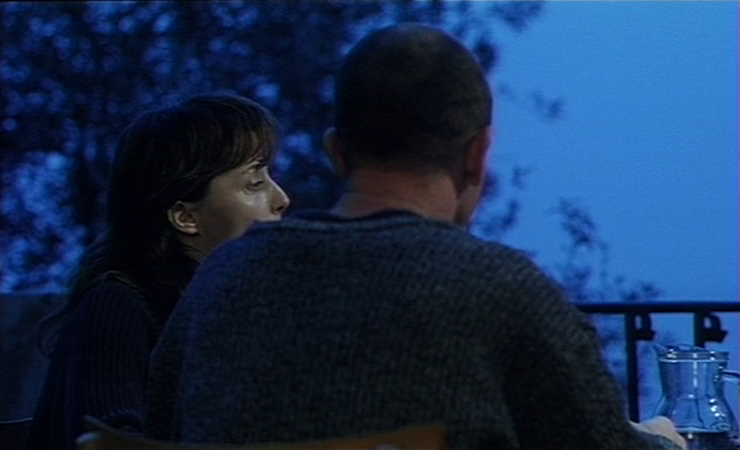
SD: If your filmmaking is so distinct and, for me, so precious, it’s because it is entirely built on the idea of experience, both as a black hole and as the only reality. What hasn’t been someone’s experience absolutely doesn’t exist for you. Of course, one can convey simulacrums of experience—it’s what Bertolucci just did; one can also struggle to reproduce bits of experience —that’s what touched me so much in L’enfant secret, because at least you didn’t replace the “holes” with something, you didn’t fill them in. This is why I can speak of “news” with regard to your filmmaking: because you have a morality that is very close to that of a journalist’s, of someone who goes to see by himself and who comes back. And perhaps it’s because your formative years, like mine, were those 1970s which, as silly and naive as they may have appeared, were very much marked by this notion of experience. Not so much Sartre’s, but rather that of drugs, travels, mysticism, political action, the couple—all these dispossessions of oneself, this dandyism that can be found in Eustache, for example. So, I wonder, twenty years later, how did you hold on to that thread? What kind of life—what manner of living and of working has yours been? Or still, why are you so alone in what you do?
PG: No, there’s Godard too. He remains the creator of an intelligent cinema, positioning itself as an intelligent reflection on the world. At present, it’s possible to see films as well made as Godard’s, but they will never make you see your life from a general point of view, from the outside. It’s amazing to be able to make films that move through the mind rather than through feelings. The only interesting thing after that is the denial of the spectacle. At one point, there had been a general criticism of the act of watching images in the dark, a criticism specific to our generation. It’s the only place where we have a particularity in relation to Godard. Today, we’re back to a cinema to slash one’s wrist to. All the same, it existed with Godard, even to the point of alienation. Our generation has rather said that a film isn’t worth one’s life. Situationism brought about a sort of regression. We thought that cinema was something part-time and not all the time. So, we need to do things with the utmost sincerity and, at the same time, not be completely alienated by this special thing that is the cinema. Our generation hasn’t brought love into the machines like the previous generation or the next one. It’s not about being a diehard, just the feeling that this fanaticism is a form of alienation. Not realizing that it’s better to be in love than to make a good film about it is also a kind of alienation.
SD: Godard said something like that: we saw Journey to Italy, a guy who puts the woman he loves in a car, who puts the camera in the back, and we understood that it was possible to film just like that, without necessarily revolutionising the cinema, and that this was enough to confer whoever did so with a certain dignity. The love for cinema, in this sense, is always the love for the impurity of cinema. Whereas what is returning today is this mysticism of the grand œuvre, the opus magnum, which devastates me. Once again, Les Enfants du paradis. Well, it’s not such a bad film, but if that were all there was to cinema, I would have chosen something else. What’s returning is really art pompier—Blier’s film for example, with the nudes of the death train presented à la Bouguereau. But perhaps you experience this divorce between the “professionals of the profession” and what you are doing in a more serene way?
PG: When we were twenty years old, being the resident intellectual was despised. Among my friends, one of the most intelligent had become a house painter to fight against the intellectuals or art. Chantal Akerman was appalled when she saw the Jarmusch ad which said that there are never too many images. She thought it was the ultimate irony to say that, given that we are in a situation of alienation in relation to the image. No artist can be criticised these days, because the ideology of work has come back. This idealisation was seriously questioned by our generation. We thought that working made no sense. Today, Leos Carax, for example, retains a certain mysticism of cinema even in the worst situations (and I talk about Leos because I like him). In the end, he thinks that working maniacally is something good. For our generation, work was the price to pay to continue to exist, but we would never say that it’s something good in itself. Right now, we are in the midst of a return to this morality of work. This is the reason why it becomes difficult for a critic to demolish a filmmaker, because each film is a trauma. It’s like trying to turn a race car at 300km/h.
SD: Is this really work, though? Criticism has been able to exist for a long time because even when watching a film, let’s say by Cukor, it could distinguish between Cukor’s work and the way the studio system was also working. Then, criticism joined forces with the “moderns”, people who work but who aren’t afraid to make their anxieties visible too. When Truffaut can speak generally about women in Bergman’s films and, in Les 400 coups, has Léaud steal the picture of Harriet Andersson (Monika), a woman Bergman loved, he reaches a real point of equilibrium between the film critic and the filmmaker. But today, it is less certain that cinema is work. Someone who takes years to make a film, works like a madman, spends all his energy to get the funds, set everything up, promote—what’s left to make the film? And that’s annoying for the film critic, because what legitimises him is that he is accompanying a work without becoming the press secretary of a “feat”. It’s annoying because, in the long run, all that we ask of him is to baptise a film as a “film”, nothing else. That’s why I believe that we’re less in the ideology of work than in the ideology of what works for us. Images work for the brands. Does Carax build an image of himself as an artist? It works for him and protects him. Because Carax has considerable talent, what’s at stake over his film is a genuine test of truth for everyone. This is why the proportion of experience conveyed in films is getting more and more tenuous. When that happens, for example, in the way the kid speaks in Le Petit criminel, well, we don’t ask for more, we say thank you.
PG: The growing seriousness of the new generation perhaps comes from the fact that there is no longer someone like Langlois to show The Wedding March... A guy who has said “Action” several times is necessarily convinced that he has made a film. I see Godard as the last important filmmaker, and those that come after, I just can‘t put on the same level. I’m talking about the filmmakers of my generation. This probably comes from the fact that we have chosen to adopt the minimum of gestures in order to survive. For the next generation, it’s the opposite, since they have chosen to re-adopt the ideology of money. Cinema is an art and at the same time something that you buy while shopping and where the films of the past are constantly erased. It’s the reason why people don’t have a point of comparison.
SD: Do you think that it’s linked to historical periods?
PG: Everything is linked to history. During the Gulf War, I became aware of the importance of filmmakers like Chris Marker or Joris Ivens. But it’s precisely because I had a historical perspective. Upon seeing an image of Baghdad, I understood the importance of this cinema.
SD: When you came to the radio station for “Microfilms”, you told me: “Doillon, Akerman, Jacquot, me, today we are the filmmakers.” But you added: “That being said, we do what we can and it’s not extraordinary.” Something called cinema will soon have lasted for almost a century and continues through these people...
PG: Yes, but in minimum service.
SD: After what we saw—or rather what we didn’t see—on TV during the Gulf War, it’s true that the memory of Ivens’ images, partisan as they may have been, were gaining in strength. As if the experience of war were also taken from us. That’s the minimum service. It’s the service that goes from Lumière to Godard, by way of Griffith and Rossellini. An idea of cinema that is the opposite of pious illustration, of decorative liturgy. In the domain of images and sounds, there are the mystics and those who go to mass every Sunday. I prefer the mystics. Television is like mass. Suffice to say that there are no images. It’s stupid to say that there are too many images. On the contrary, there aren’t enough.
PG: What we were after was for the film to be more modest but for its imprint on life to be more just. In fact, that’s what didn’t catch on.
SD: Cinema didn’t really enter into people’s lives. It entered their imaginary museum or the shelves of their video collection.
PG: How to explain that the research on dreams so present in the silents, promoted by the Surrealists, continued by Buñuel, has arrived at dock and doesn’t really have a follow-up? The figurative cinema of today is more into the existential than the social, but it definitely isn’t into dreams. While Freud was wondering why artists weren’t drawing more inspiration from dreams. We’re amid a cinema of zombies, of early risers, of guys who run to their cameras and who expel their dreams as soon as they’re on set.
SD: We’re in an era where the individual is torn between the reality of the market and the demands of democracy. That’s the hellish triangle of today. That’s what creates the “comedy of individualism”. If I like Moretti so much, it’s because only the comics can really talk about this. Comics have to sell themselves, otherwise they disappear. A comic who doesn’t make people laugh can’t be rescued by irony. And if Blier, as seductive as he may be, never convinces me, it’s because he takes the individual as the residue of a massive cultural operation of which he, Blier, is the universal heir, the one that is going to reconcile everything. It’s naive, as is his cinematic conception of dreams or fantasy. It seems that he’s thinking: how courageous I am to expose my dreams and fantasies, to tap into my unconscious which is perhaps a horrible den of perverse, misogynistic, shameful things! Now, fantasies are the least personal thing in the world; they’re collective. And dreams only become disturbing when they’re narrated, like with Buñuel. It’s when you recount your dream that you can’t be yourself. The dream itself is merely a montage of coded elements obeying precise, impersonal rules. Well, perhaps that’s the artistic dead-end of contemporary individualism: the individual is meant to have an unconscious the way one “owns” something; he is supposed to have an inner life that is intimate, ineffable, “personalised” and only comic auteurs, like Moretti or Rohmer, can see the vanity of this and allow us to laugh at it, as one should. I see the ad for Madame Bovary, “Madame Bovary is you”—then everybody is going to think that they have their own unique, singular reading of Madame Bovary whereas their reading—and that’s the funny part—is actually Pivot’s.
That’s why, if someone asks me why I like J’entends plus la guitare, I’m not going to say: because Garrel is a comic (that’s not really the case), but because he doesn’t believe in ownership. And especially not in the unconscious as a little store that can be made to bear fruit. In your film, there is a man, and women around him. Nothing exists except the always very rarified space between two people. What matters is the circumscribed space, that’s Georges de La Tour. Your entire cinema is made on the possibility of creating a household1, in every sense of the term. I have the feeling that you are the boundary between the modern cinema, which is a cinema of the couple and the domestic quarrel, and the current cinema, where the only thing that matters is the emancipated individual which we don’t really know what to do with. I need only point to the extraordinary status of women in your films as proof. I had never thought it possible to get so close to an idea of equality between men and women. For me, it’s very mysterious because deep down, I don’t believe in it.
PG: Yes. I took that from Godard when I was little. It’s the only place where I found him more intelligent than everybody else. I thought his films had two uses: on one hand he was making the film to show it to his wife, and on the other, it gave him a profession by providing him enough for a living. The most powerful moment for him must have been the moment when he showed his wife the portrait he had made of her. Moreover, all this exists in the world of painting. I found this much more interesting than all the cinema that had existed before him.
SD: The Godard effect extends beyond cinema. We say “Godardian” as we say “Proustian”, “Kafkian”; it doesn’t mean that everyone has seen or read their work, it means that they have profoundly impressed other filmmakers and writers. But it also means that he won’t be the one to have the public success, it will be the one or ones who knew to “naturalise” some of the Godardian novelties with the audience. This was Lelouch one time, for example. But what I’m sure of, is that effects of this kind are not retroactive and that in cinema, everything happens “in real time”. There is something of a final verdict with cinema: in other words, I don’t believe that A King in New York will one day enjoy a triumphant re-release. That’s probably the beauty of cinema, perhaps also its limitation. Sometimes the audience has some talent, sometimes not, but it stands its ground and doesn’t forgive those who have played with it. But there are always some immediate recyclers.
PG: There’s an element of hypnosis, of autosuggestion on the part of the public. When people said that Eustache was the greatest filmmaker of his generation, it meant nothing to us. Eustache was one of us, that’s all. I was sure people were going to say that, simply because he killed himself. All things considered, I think that’s what mystification is about. When it comes to images and sounds, we aren’t sure of anything. So there’s this principle of autosuggestion (and when the public goes to see a successful film, they idolise it even before it has started).
SD: A big success is like a co-production. Sometimes the ball is more on the audience’s side, sometimes it’s not. All the same, there can be some true meetings between the two, like when all the kids and cinephiles of the world wanted to see 2001: A Space Odyssey. A big success today, let’s say La Discrète, would be very nice if we could screen La Maman et la Putain right after, since it’s clear that everything comes from there.
PG: It’s very difficult to assess films. Because we see them one by one, we can’t distinguish their heights. One evening, Langlois, who always took great pleasure in combining very different films, had programmed Bergman’s Persona at 8pm, and at 10pm, Don’t Look Back, by Leacock and Pennebaker with Dylan. The way I had seen them in town, I thought that Persona was a masterpiece and that Don’t Look Back was just nice, nothing more. But when I saw them one after the other, Don’t Look Back really held up well and was really on the same height as Persona. Since that day, I know that it is very difficult to see the true height of films. The audience is slightly deluded about that. You can give them something very low, but from the moment that you manage to get them captivated, you’ve won.
I remember how we used to watch Stroheim’s films at the Cinémathèque. They were very long. I would be half asleep. But the vision of Stroheim’s shots, in between sleeps, was extraordinary. It was up there with classical music. There was a sort of wonderful permeability to the imaginary. Today, we see films too much in the context of escalating releases, this never-ending forward rush, and we lose sight of the scale of values. That being said, what I care about first and foremost is whether a film gives off the feeling of existing. When I saw Godard’s films, at the age of thirteen or fourteen, it really made me want to live. These films proved to me that love exists. I’ve always thought that cinema was just that. There are some great films that leave you feeling like ants. That’s why I don’t really like American cinema. The problem is to lift the lid that is preventing us from thinking. I don’t admire Pierrot le fou as an object, but as a rupturing of limitations. The most important thing in art is the return to oneself. It’s in this way that art can even slightly act as a lifesaver and keeps the death drive at bay. But the hardest thing to do right now, is to resist the neurosis of the spectacle.
Remarks collected by Thierry Jousse. Cahiers du cinéma, 40th anniversary edition, issue 443- 444, May 1991.
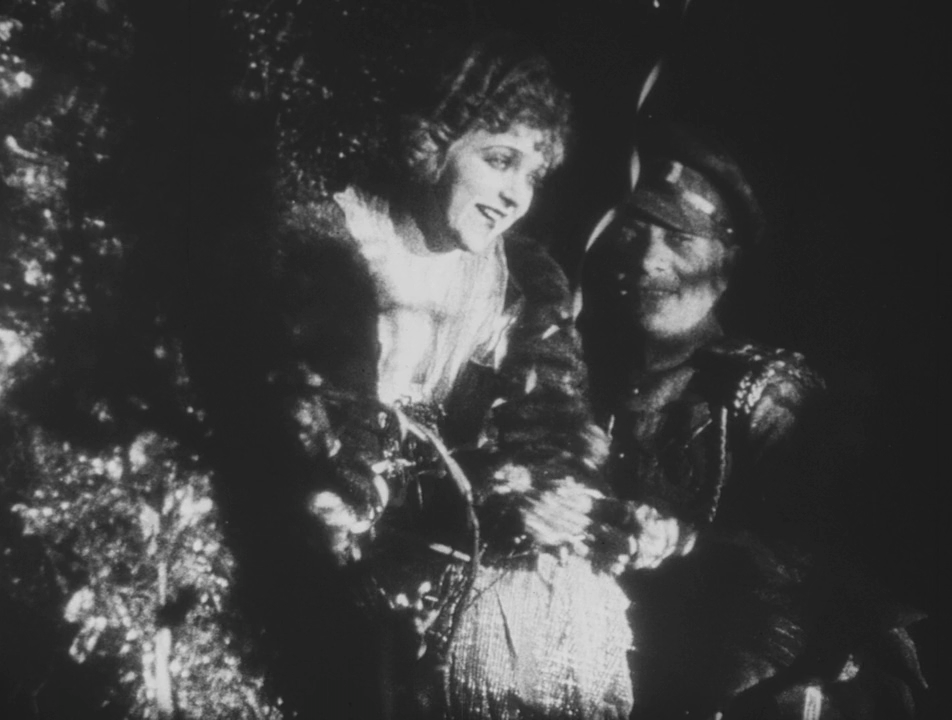
Foolish Wives (1922)
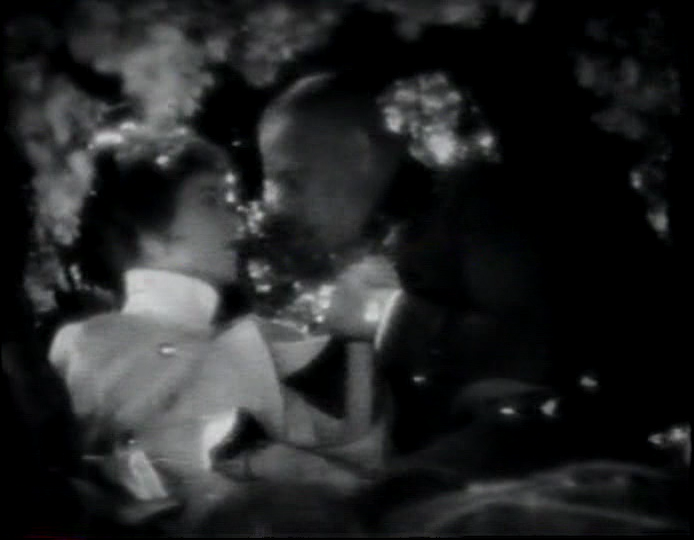
The Wedding March (1928)